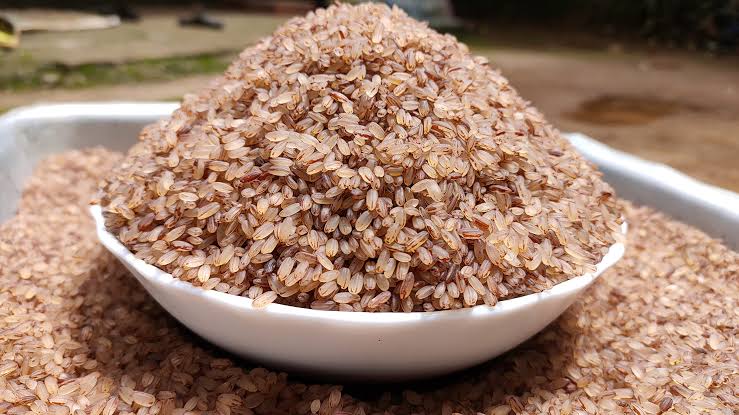
Ofada rice is a local, indigenous variety grown in and around Ofada town in Ogun State, Nigeria. Unlike polished imported rice, it's typically sold partially milled, with a slightly grey-brown colour, a firmer bite and a distinct, earthy aroma.
Origin & History
Ofada rice takes its name from Ofada, a town in Ogun State, southwest Nigeria, where the grain has traditionally been grown and processed.
Ofada rice has long been part of Yoruba food culture, historically grown on smaller local farms rather than as an industrial export crop. Because it's minimally polished, it retains more of the outer bran layer than imported white rice — this is also why it traditionally needed more careful sorting and washing before cooking, to remove small stones or chaff left over from local processing. It's most famously served with ofada stew, also known as ayamase, a rich pepper sauce made with green scotch bonnet and bell peppers.
Nutritional Information
Because it's less processed than polished white rice, Ofada rice generally retains more of its natural bran, which means more dietary fibre along with small amounts of iron and B vitamins compared with more heavily milled rice.
Health Benefits
How It's Used
- Ofada rice with ayamase (green pepper stew)
- Served with assorted meats and boiled eggs, in the traditional style
- As a firmer-textured alternative to polished rice in local dishes
Storage
Store in an airtight container away from moisture. Because it's less processed, it's worth picking through and rinsing thoroughly before cooking to remove any stones or husks.
Did you know?
In local markets, Ofada rice is traditionally sold loose or wrapped, rather than pre-packaged — part of why it's often associated with a more "home-grown," farm-to-pot character than imported rice.
This article is for general food knowledge and isn't medical advice. Nutrition and health information here is general in nature — for individual dietary guidance, speak with a qualified healthcare professional.
← Back to Blog