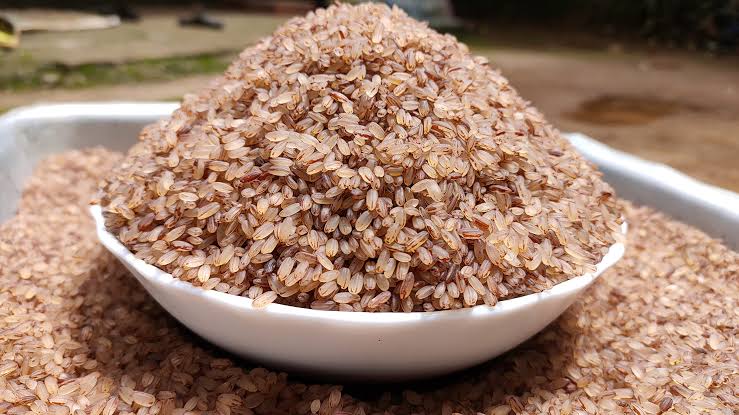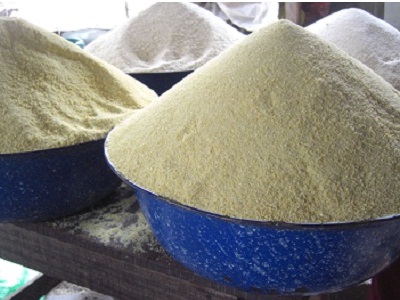
Garri is a dry, granular food made from processed cassava. It's a daily staple across much of Nigeria and West Africa, eaten either soaked cold with sugar and groundnuts, or mixed with hot water and stirred into a smooth "eba" to eat with soup.
Origin & History
Garri is made from cassava, a root crop that originated in South America and was introduced to West Africa via Portuguese trade routes several centuries ago. Garri itself — the processed, fermented and toasted form of cassava — is a West African innovation.
Cassava took root across West Africa partly because it grows well in a range of soils and is relatively drought-tolerant. Raw cassava contains naturally occurring cyanogenic compounds, so it must be processed — traditionally peeled, grated, fermented, pressed and then toasted — to make it safe to eat. That process is what produces garri: a shelf-stable, versatile staple that could be stored and traded far more easily than fresh cassava.
Nutritional Information
Garri is primarily a carbohydrate source, providing energy with a small amount of fibre. It's naturally gluten-free. It's relatively low in protein and fat on its own, which is why it's traditionally eaten alongside protein-rich soups and stews.
Health Benefits
How It's Used
- Eba — garri mixed with hot water into a smooth dough, served with soup
- Soaked garri — cold-soaked with sugar, groundnuts or coconut, sometimes with milk
- Garri ijebu — a more sour, crunchy soaked-garri style popular for a quick snack
Storage
Keep in an airtight container in a cool, dry place, away from moisture. Properly stored and dry, garri can keep for many months without refrigeration.
Did you know?
There are two common types in Nigerian markets: yellow garri, coloured and flavoured with palm oil during processing, and white garri (often called "Ijebu garri"), which is more sour and crunchy and typically eaten soaked rather than as eba.
This article is for general food knowledge and isn't medical advice. Nutrition and health information here is general in nature — for individual dietary guidance, speak with a qualified healthcare professional.
← Back to Blog